A catalytic converter may look like a small component underneath your vehicle, but it can hold surprising value when it comes time to recycle or scrap your car. Many vehicle owners are unaware that this exhaust system part contains precious metals that can significantly influence the overall value of a junk vehicle.
Whether you are selling an old car, recycling a damaged vehicle, or simply wondering how much your catalytic converter is worth, understanding catalytic converter scrap value can help you make better decisions and avoid accepting a low offer.
In this 2026 guide, we explain how catalytic converter pricing works, what makes some converters more valuable than others, and how you can estimate the potential value of yours.
What Makes a Catalytic Converter Valuable?
The reason catalytic converters have scrap value is because they contain rare and expensive metals. Inside the converter is a ceramic honeycomb structure coated with precious metals that help reduce harmful emissions from vehicle exhaust.
The main valuable metals found inside catalytic converters include:
- Platinum
- Palladium
- Rhodium
These metals are used because they can withstand extreme temperatures and help convert harmful gases into less damaging emissions.
Among these metals, rhodium is often considered one of the most valuable due to its limited supply and high market demand. However, the amount of each metal inside a converter varies depending on the vehicle manufacturer, model, engine size, and emissions standards.
This is why two catalytic converters that look almost identical externally can have completely different scrap values.
How Much Is a Catalytic Converter Worth in 2026?
The scrap value of a catalytic converter can range from around $50 to more than $1,000, depending on the type and condition of the unit.
Some common factors affecting value include:
- Vehicle make and model
- Converter type
- Amount of precious metals inside
- Current platinum, palladium, and rhodium prices
- Market demand
- Whether it is an original factory converter or aftermarket replacement
For example, converters from larger vehicles, trucks, and SUVs often contain more valuable materials because they are designed to handle higher exhaust volumes. Meanwhile, smaller aftermarket converters may have lower precious metal content and therefore a lower recycling value.
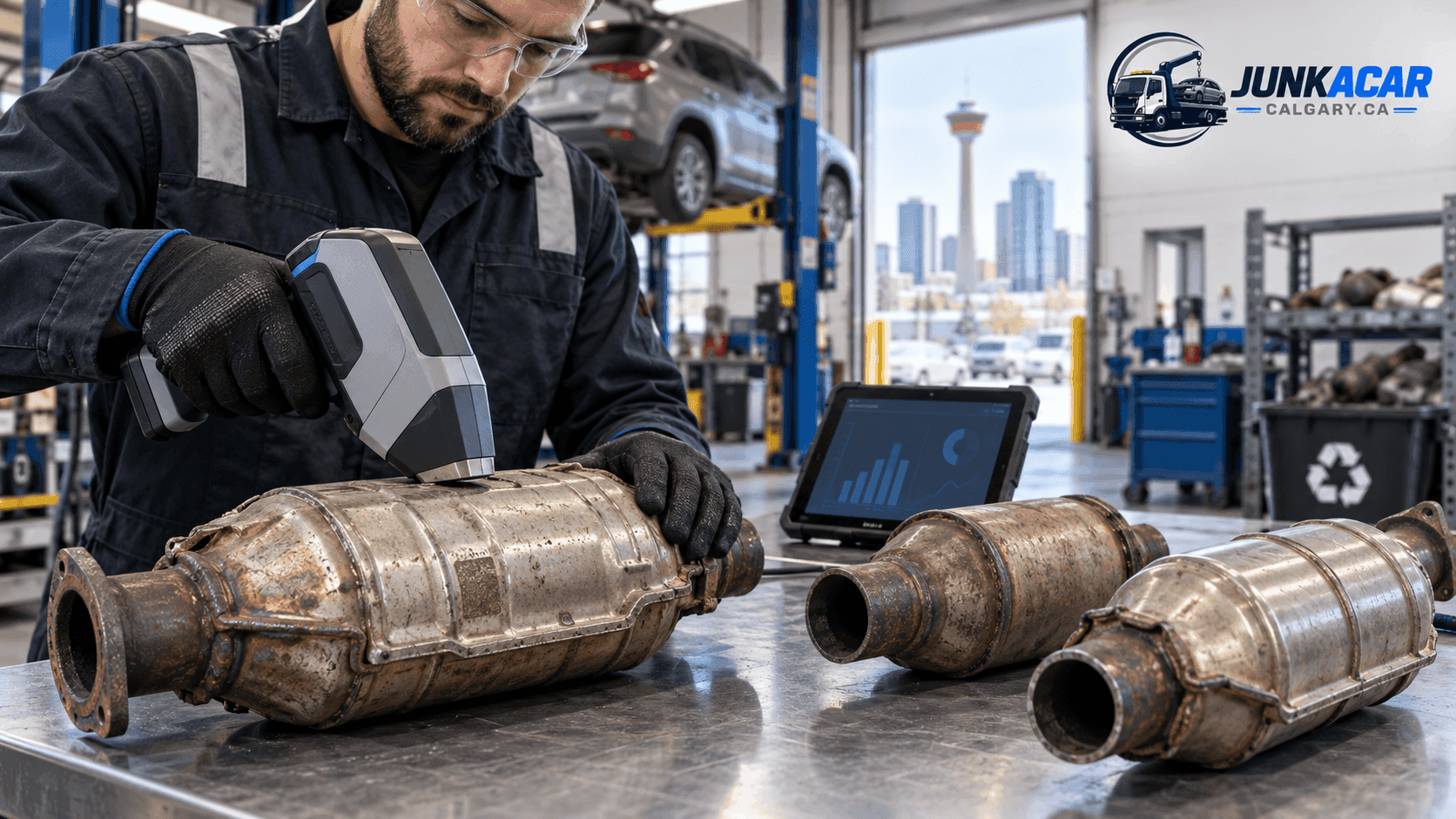
The only way to get the most accurate estimate is through professional converter identification or testing.
Why Catalytic Converter Prices Change Frequently
Many people wonder why the price of a catalytic converter can change from month to month. The answer comes down to precious metal markets.
The metals inside catalytic converters are traded globally, and their prices are influenced by:
- Mining supply
- Manufacturing demand
- Automotive industry changes
- Environmental regulations
- Global economic conditions
For example, if demand for platinum or palladium increases, recycling companies may pay more for converters containing those metals.
Because of these market changes, a converter that was worth $300 last year may have a different value today.
Factors That Determine Catalytic Converter Scrap Value
1. Vehicle Make and Model
The vehicle manufacturer plays a major role in determining converter value.
Certain vehicles are known for having higher-value catalytic converters because they contain larger amounts of precious metals. Examples often include:
- Luxury vehicles
- Larger SUVs
- Pickup trucks
- Hybrid vehicles
- Older vehicles with high-quality factory converters
Hybrid vehicles can sometimes have valuable converters because they experience less extreme exhaust temperatures, allowing manufacturers to use higher concentrations of precious metals.
2. OEM vs Aftermarket Catalytic Converters
One of the biggest differences in scrap value is whether the converter is an original equipment manufacturer (OEM) part or an aftermarket replacement.
OEM converters are installed by the vehicle manufacturer and typically contain higher-quality materials. Because of their precious metal content, they often have a higher recycling value.
Aftermarket converters are designed as replacements and usually contain fewer valuable metals, which means their scrap value is often lower.
If you are recycling a vehicle, knowing whether your converter is original can help you understand its potential worth.
3. Converter Size and Design
The physical size and design of a catalytic converter also affect its value.
Larger converters generally contain:
- More ceramic material
- More coating surface area
- Greater amounts of precious metals
Vehicles with larger engines usually require bigger converters because they produce more exhaust gases.
4. Precious Metal Content
The real value comes from what is inside the converter, not just its external appearance.
A converter with higher levels of platinum, palladium, and rhodium will naturally have a higher scrap price.
Professional recycling companies use specialized databases and testing methods to identify converter value based on:
- Serial numbers
- Manufacturer codes
- Vehicle application
- Metal composition
How to Identify Your Catalytic Converter's Value
Many vehicle owners make the mistake of guessing their converter's value based only on the vehicle model. While vehicle information helps, accurate pricing requires more details.
You can improve your estimate by checking the following information.
Converter Identification Numbers
Most catalytic converters have stamped numbers or markings that can be used to identify their type.
These codes help recyclers determine:
- Manufacturer
- Converter category
- Vehicle application
- Expected precious metal content
Vehicle Information
Keep details such as:
- Year
- Make
- Model
- Engine size
- Mileage
This information can help buyers provide a more accurate quote.
Professional Evaluation
A reputable scrap buyer or recycling company can evaluate your converter and provide a realistic market-based offer.
Avoid companies that provide unusually high estimates without checking the actual converter details.
Common Mistakes People Make When Selling Catalytic Converters
Accepting the First Offer
One of the biggest mistakes sellers make is accepting the first price they receive.
Different buyers may offer different amounts depending on their recycling network, current demand, and processing costs. Comparing multiple quotes can help you receive a fair price.
Assuming Every Converter Has High Value
Not every catalytic converter is worth hundreds or thousands of dollars.
Some smaller converters contain limited precious metals, while aftermarket units may have lower recycling value. Understanding your specific converter type prevents unrealistic expectations.
Ignoring Local Market Conditions
Scrap prices can vary by location because of transportation costs, buyer competition, and regional demand.
Checking local recycling markets can help you understand what buyers in your area are currently paying.
Can You Sell a Catalytic Converter Without a Vehicle?
Yes, catalytic converters can be sold separately if they are legally obtained. Many recycling companies purchase individual converters from vehicle owners, repair shops, and auto recyclers.
However, because catalytic converter theft has become a serious issue in many areas, legitimate buyers may require:
- Identification
- Ownership proof
- Vehicle information
These requirements help prevent illegal sales and protect honest sellers.
Environmental Benefits of Recycling Catalytic Converters
Recycling catalytic converters is not only financially beneficial but also environmentally responsible.
Recovering precious metals reduces the need for additional mining and helps conserve natural resources.
The recycling process allows valuable materials to be reused in:
- Automotive manufacturing
- Industrial applications
- New emission-control systems
Instead of sending an old vehicle component to waste, recycling helps create a more sustainable automotive industry.
How to Get the Best Catalytic Converter Scrap Price in 2026
If you want to maximize your return, consider these practical tips:
- Identify your converter before selling
- Compare offers from multiple buyers
- Avoid removing other valuable vehicle parts too early
- Work with reputable recycling companies
- Monitor precious metal market trends
- Keep ownership documents available
A little research can make a major difference in the amount you receive.
Final Thoughts
The value of a catalytic converter in 2026 depends on far more than its size or appearance. Precious metal content, vehicle type, converter design, market prices, and whether it is an OEM component all influence the final scrap value.
For vehicle owners, understanding these factors means making smarter recycling decisions and avoiding unfair offers. Whether you are scrapping an old car or selling a standalone converter, taking time to research its value can help you get the best possible return.
A small component under your vehicle may represent a significant opportunity, and knowing what makes it valuable is the first step toward getting the price it deserves.